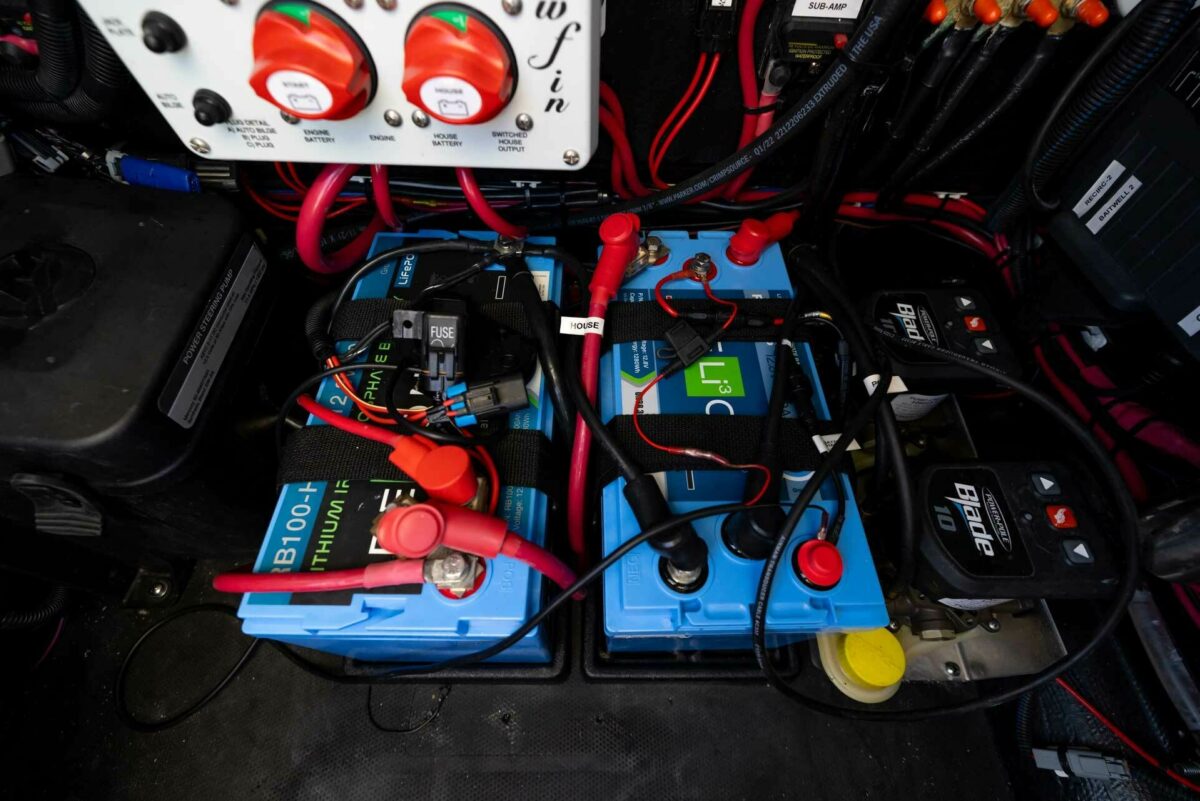
Upgrading your boat’s battery system can dramatically improve performance, but how you connect your batteries—in series or parallel—makes a big difference. Each configuration has unique advantages and is best suited for different marine power needs. Understanding the differences will help you maximize efficiency, runtime, and reliability on the water.
Series vs. Parallel: What’s the Difference?
- Series Connection: Batteries are wired end-to-end, increasing voltage while maintaining the same amp-hour (Ah) capacity.
- Parallel Connection: Batteries are wired side by side, increasing amp-hour capacity while keeping voltage the same.
When to Use a Series Connection
A series connection is ideal when you need higher voltage (e.g., from 12V to 24V to 36V or 48V) while keeping battery capacity unchanged. This configuration is commonly used in systems that require increased power output, such as larger electric motors or certain onboard equipment.
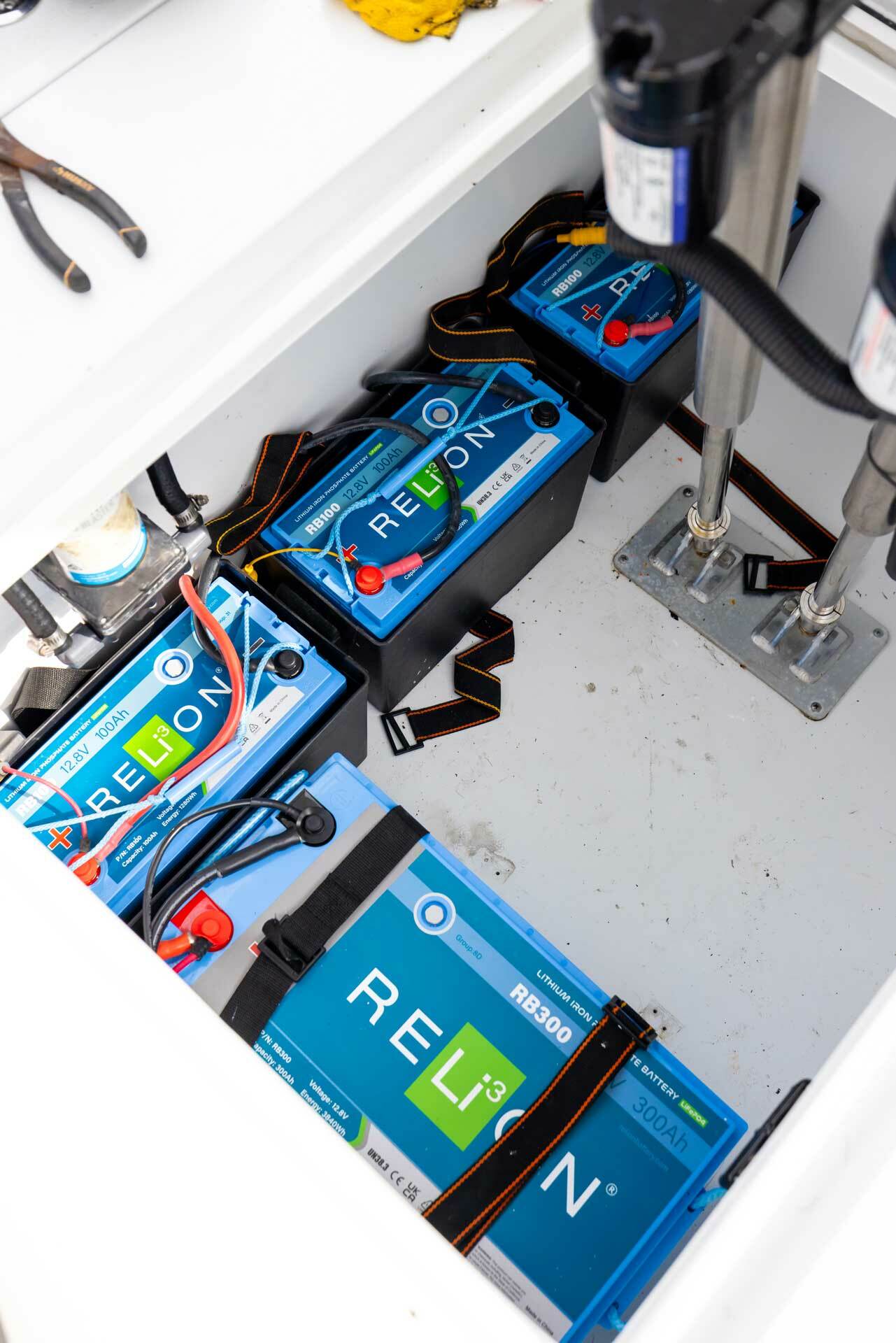
A Series Connection Is Best for:
- Boats with 24V, 36V or 48V trolling motors
- Marine electrical systems requiring higher voltage for efficiency
- Reducing power loss over long wiring distances
Considerations:
- You’ll need a charger that matches the higher voltage
- If one battery fails, the entire system may be compromised
When to Use a Parallel Connection
A parallel connection is the best choice when you want to increase capacity (Ah) and extend battery runtime while keeping the same voltage. This setup is ideal for powering devices that have a steady, moderate energy draw over longer periods.
A Parallel Connection Is Best for:
- Boats with large energy demands (e.g., houseboats, liveaboards)
- Running high-draw appliances like refrigerators, lights, and electronics
- Extending power availability without increasing voltage
Considerations:
- Uneven charging/discharging can lead to battery imbalances
- Requires thick cables to handle higher current loads
Can You Combine Series and Parallel?
Yes! A series-parallel configuration allows you to increase both voltage and capacity, making it a great solution for boats needing both higher power and longer run times. However, it requires careful balancing and a battery management system (BMS) for optimal performance.
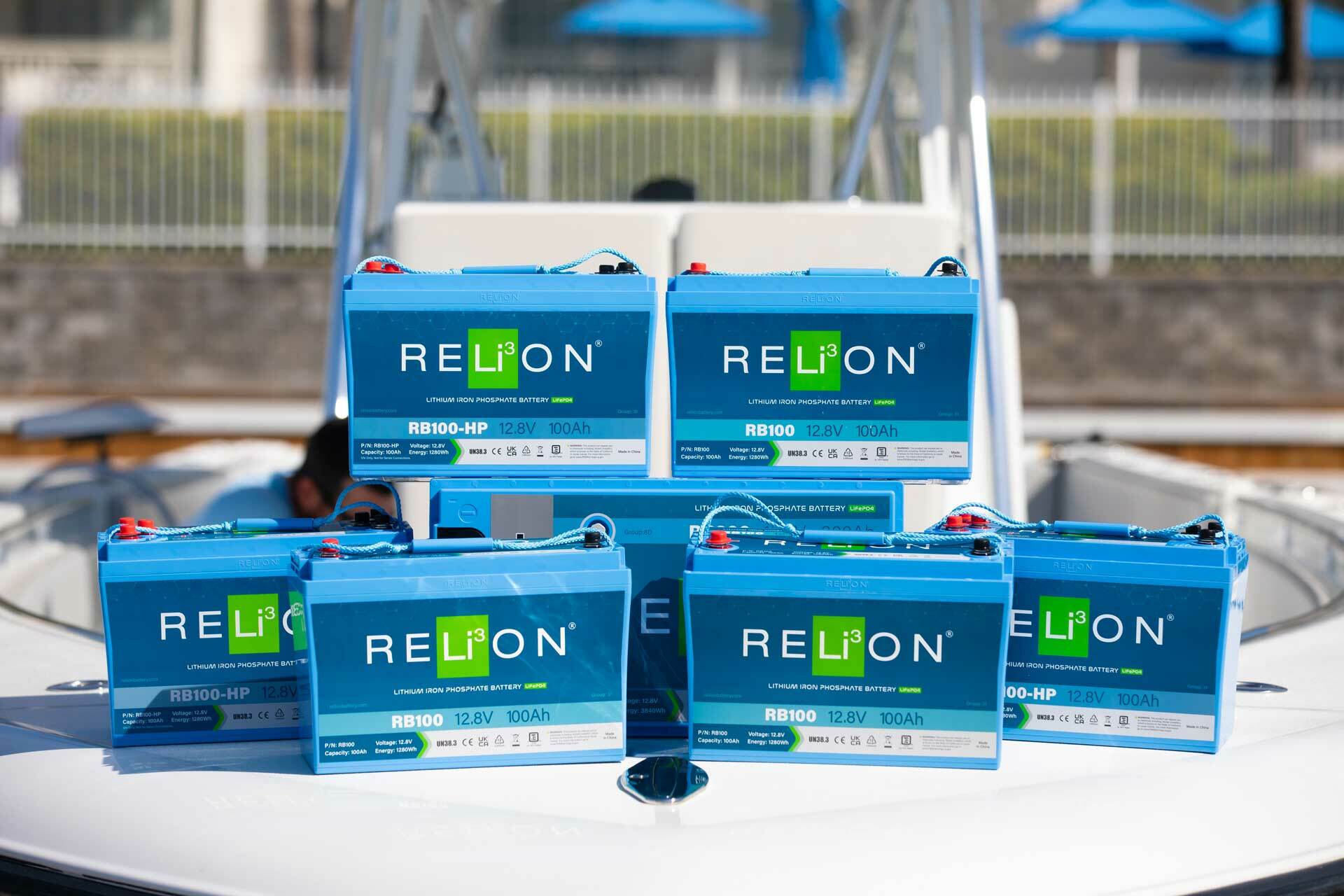
Final Thoughts: Which Is Right for You?
- If you need higher voltage for more efficient power delivery, go with series.
- If you want a longer runtime and more capacity, choose parallel.
- If your system demands both, consider a series-parallel setup.
No matter your choice, always ensure your marine battery system is properly sized, balanced, and managed to maximize battery life and efficiency. If you have any questions about which is right for your needs, get in touch with a technical expert at RELiON.